
Infrastructure
NVIDIA Nemotron 3.5 Super VL Transforms Multimodal AI Deployment on AWS
NVIDIA Nemotron 3.5 Super VL brings multimodal agentic AI to AWS, enabling efficient reasoning and tool use across text, images, and video workloads.
Key takeaways
- Nemotron 3.5 Super VL enables unified text and visual AI tasks on AWS, reducing infrastructure complexity.
- AWS integration automates resource scaling and simplifies model deployment for enterprise use cases.
- Built-in benchmarking and flexible architecture help businesses optimize for latency, capacity, and cost.
AI-generated from the cited source and editorially curated by AINEVERSTOPS. Read our editorial policy →
Previously: Siloed Models and Fragmented Workflows
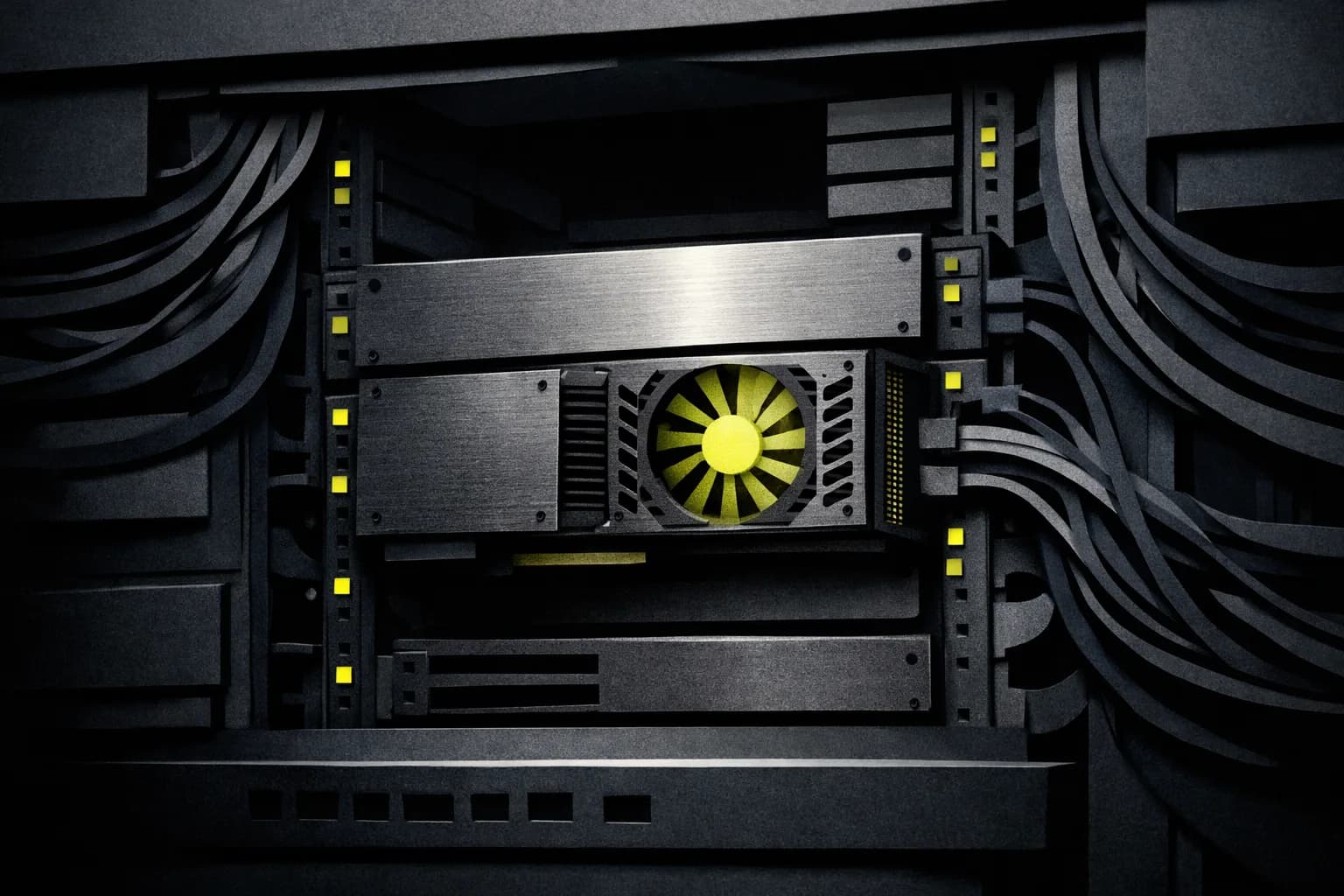
Until very recently, businesses seeking AI-driven insight from both text and visual data faced tough tradeoffs. Text models handled language tasks; separate vision models parsed images or video. Stitching these into a single workflow meant orchestration overhead, duplicated infrastructure, and more headaches for IT teams. Fine-tuning or customizing models for domain-specific tasks required deep expertise and access to raw model weights, which were often unavailable or locked behind proprietary APIs. Deploying at scale, especially for agentic AI—where models reason, plan, and use external tools—meant cobbling together different frameworks, patching compatibility gaps, and wrangling GPU resources across fragmented cloud offerings. Bottlenecks showed up fast, both in technical complexity and in costs.
What Sets Nemotron 3.5 Super VL Apart for Multimodal Tasks
NVIDIA’s Nemotron 3.5 Super VL breaks with this pattern. It’s a 120-billion-parameter mixture-of-experts model designed from the outset to reason, take actions, and understand inputs spanning text, images, documents, and video. Instead of running multiple specialized models, organizations can now deploy a single multimodal system that covers tasks ranging from code analysis and document intelligence to video incident review. The architecture’s hybrid Mamba-2, attention, and expert layers, with sparse routing, mean only 12 billion parameters are activated per token—so compute requirements stay manageable despite the model’s massive size. With a context window up to 1 million tokens and support for text output from complex visual input, it handles genuine business documents, charts, and even extended video transcripts in a way legacy systems simply could not. Dataset and post-training transparency from NVIDIA gives teams the keys to adapt the model for specialized domains.
AWS Integration: From Painful Orchestration to Click-to-Scale
Historically, hosting large AI models in production demanded hand-crafted Kubernetes manifests, custom GPU scheduling, and manual tuning of networking and storage. The risk of running into scaling limitations or misconfigured clusters kept many teams stuck in proof-of-concept purgatory. With Nemotron 3.5 Super VL, AWS streamlines this process by supporting deployment on Amazon EKS, EKS Auto Mode, and SageMaker HyperPod EKS. GPU resource management, Elastic Fabric Adapter (EFA) networking, and scalable storage with Amazon FSx for Lustre are integrated via standard Kubernetes manifests. EKS Auto Mode automates scaling and GPU provisioning, abstracting away much of the infrastructure maintenance that previously haunted DevOps teams.
The deployment reference implementation is containerized, relying on Amazon’s Elastic Container Registry (ECR) for images and providing validated architecture patterns. Whether aggregated on a single node or split into prefill and decode stages across nodes, the model’s serving stack adapts to workload demands. Disaggregated vision-language processing is possible without major rework—a sharp contrast to legacy deployments that offered little flexibility in compute resource arrangement.
Performance Validation and Real-World Planning Made Practical
Businesses adopting large language and vision models need to understand not just theoretical throughput but live metrics on latency, capacity, and concurrency. In the past, this meant piecemeal testing and guesswork. Now, integrated tools like NVIDIA’s aiperf let teams measure time to first token, inter-token latency, and throughput under realistic loads directly on their AWS clusters. Visualization and concurrency sweeps offer insights on when to aggregate or disaggregate deployments and how to size clusters to hit specific latency budgets—say, keeping first response under 600 milliseconds and per-token latency under 100 ms. These measurements, combined with automated benchmarking and monitoring, enable data-driven decisions about scaling and topology—something that was far more opaque just a year ago.
Implications for Enterprises and Agentic AI Workflows
By consolidating reasoning, tool use, and multimodal input in one open model, Nemotron 3.5 Super VL removes the friction of managing multiple AI stacks. Integration with open agent frameworks and orchestration systems through NVIDIA’s reference implementations and toolkits lowers the expertise barrier for enterprises keen on deploying agentic AI. Tasks like code validation, cybersecurity triage, document summarization, and video review move from isolated experiments to production-ready workflows running on infrastructure companies already trust. For businesses, this means faster time to value, more efficient use of GPU resources, and the agility to pivot as new use cases emerge. The shift from fragmented, manual deployment to one-click, scalable orchestration marks a new chapter for enterprise AI adoption.
- nvidia
- aws eks
- multimodal ai
- mixture-of-experts
- enterprise ai
- deployment
Source: AWS Machine Learning Blog
Keep reading

Want AI in production at your company?
Tell us about your project: we reply with a free first assessment and the next steps.
Join the Observatory list
Leave your email to hear about new pieces from the Observatory — concise AI analysis from real projects.