
Models
Nvidia PAIR connects idle PCs for personal AI compute
Nvidia's Personal AI Router links home computers for local AI tasks, turning idle PCs into a private data center. Here's how this changes AI at home.
AI-generated from the cited source and editorially curated by AINEVERSTOPS. Read our editorial policy →
Local AI workloads: From single PC limits to networked muscle
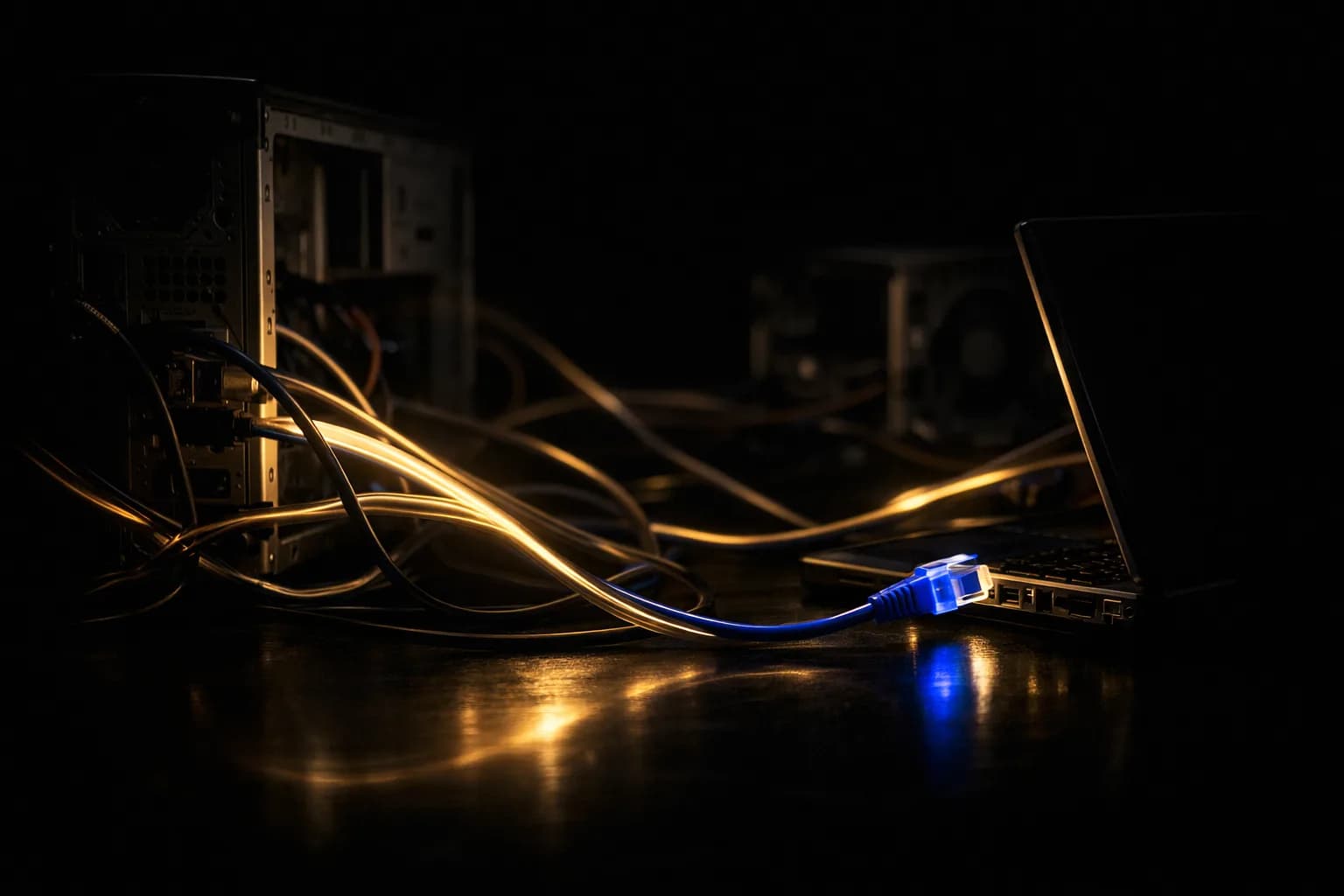
Traditionally, running demanding AI models locally meant confining yourself to the horsepower in a single machine. Gamers with hefty GPUs—or researchers with the budget for high-end desktops—could experiment with local large language models, but everyone else hit a hard ceiling. Your old laptop, your home office PC, and the gaming rig in the den each operated in isolation, often idling for most of the day. Distributed computing at home was possible, but setting it up required technical know-how and third-party tools few bothered to wrangle.
Now Nvidia’s Personal AI Router (PAIR) takes a sledgehammer to those walls. The new software, open source and free, syncs up your home computers to share AI workloads. Instead of one machine sweating over inference tasks, you can spread the job across every compatible device under your roof. Idle hardware is no longer dead weight; it’s a node in your personal AI cluster.
How PAIR redefines home AI infrastructure
PAIR isn’t another hardware box—it’s a coordinating layer. Install the software on each machine you want to contribute, and PAIR manages task distribution for local AI inference. It works with tools like Ollama and LM Studio, both popular for running large language models locally. PAIR’s magic lies in its simplicity: once set up, it automatically detects available resources and juggles workloads between them, maximizing use of GPUs and CPUs that would otherwise lie fallow.
For small businesses with scattered desktops, or enthusiasts with multiple unused systems, this transforms the economics of local AI. Instead of investing thousands in dedicated hardware, you can pool what you already own. The technical overhead drops from “barely worth trying” to “plug and play.”
Security and privacy: Keeping inference in your own hands
Before PAIR, many users defaulted to cloud AI services for anything too intensive to run on a single PC. That meant uploading data—sometimes sensitive—to servers managed by distant third parties. Local inference tools always promised more privacy, but were limited by hardware. By combining your own devices, PAIR makes it realistic to run larger models without relying on the cloud.
For businesses handling proprietary information or users wary of sharing data with outside providers, this isn’t just convenient. It’s a strategic shift. The ability to run powerful models internally means more control over workflows, fewer compliance headaches, and less risk of accidental data exposure.
Business impact: Lower costs, higher utilization, faster iteration
Pooling hardware isn’t a new idea—distributed computing has powered scientific research and crypto mining for years—but Nvidia’s PAIR brings that concept home. The difference is in ease of deployment and integration with mainstream local AI tools. Businesses can now iterate on private AI projects, experiment with new models, or run batch inference tasks without scrambling for extra hardware or cloud credits.
This has real cost implications. The value of existing assets jumps, and IT teams can delay expensive upgrades. For teams experimenting with custom LLMs or privacy-sensitive AI applications, the barrier to entry just dropped a notch. In our consultancy projects, we’ve seen clients hesitant to push workloads to the cloud due to regulatory or budget constraints—solutions like PAIR could tip the balance toward keeping everything in-house.
What to watch: Compatibility, expansion, and the future of home clusters
PAIR is early-stage, and its full potential depends on how well it handles a mix of devices and varying hardware capabilities. Early adopters will need to test integration with different operating systems and see how gracefully PAIR balances loads. The open-source approach should accelerate improvements.
If this model catches on, we could see a new standard for home and small office AI clusters—ad hoc, upgradable, and private by default. For now, Nvidia has handed power users a new lever. The next test will be how broadly businesses and developers choose to pull it.
- nvidia
- personal ai
- local inference
- distributed computing
- privacy
- edge ai
Source: The Verge AI
Keep reading

Want AI in production at your company?
Tell us about your project: we reply with a free first assessment and the next steps.
Join the Observatory list
Leave your email to hear about new pieces from the Observatory — concise AI analysis from real projects.