
Hardware
AI Agents Demand New Hardware Efficiency Standards
AI agents drive massive increases in computational workload. Businesses must decide whether to invest in efficient hardware like NVIDIA's Vera Rubin NVL72 to stay competitive.
AI-generated from the cited source and editorially curated by AINEVERSTOPS. Read our editorial policy →
AI Agents Multiply Workload Beyond Simple Chatbots
Deploying AI agents is not like scaling up customer chatbots. With each new use case, from automating research to complex decision-making, the computational demands explode. Data from OpenRouter shows agent-driven workloads can require up to 15 times more processing than a straightforward chatbot. This isn’t a tweak—it’s a seismic jump. Every time an agent assesses a company’s health, it’s not just chatting: it’s querying databases, cross-referencing news filings, running peer analyses, and synthesizing the results. This heavy lifting is invisible to the end user, but it hammers your infrastructure.
For business leaders, this changes the calculus. Maintaining a fleet of AI-powered agents at enterprise scale risks spiraling costs, particularly if your hardware isn’t designed for these multistep, resource-hungry tasks.
Hardware Bottlenecks Could Stall AI Agent Ambitions
Legacy data center hardware, built for old-school prediction workloads or basic chatbots, simply isn’t optimized for the emerging class of agentic AI. These agents perform chains of actions—each action spawning new queries and sub-agents—which radically increases the number of tokens processed per minute. The result? Power bills and cooling requirements climb, while throughput stalls. In the projects we run, we’ve seen many teams underestimate these scaling factors until they hit a wall.
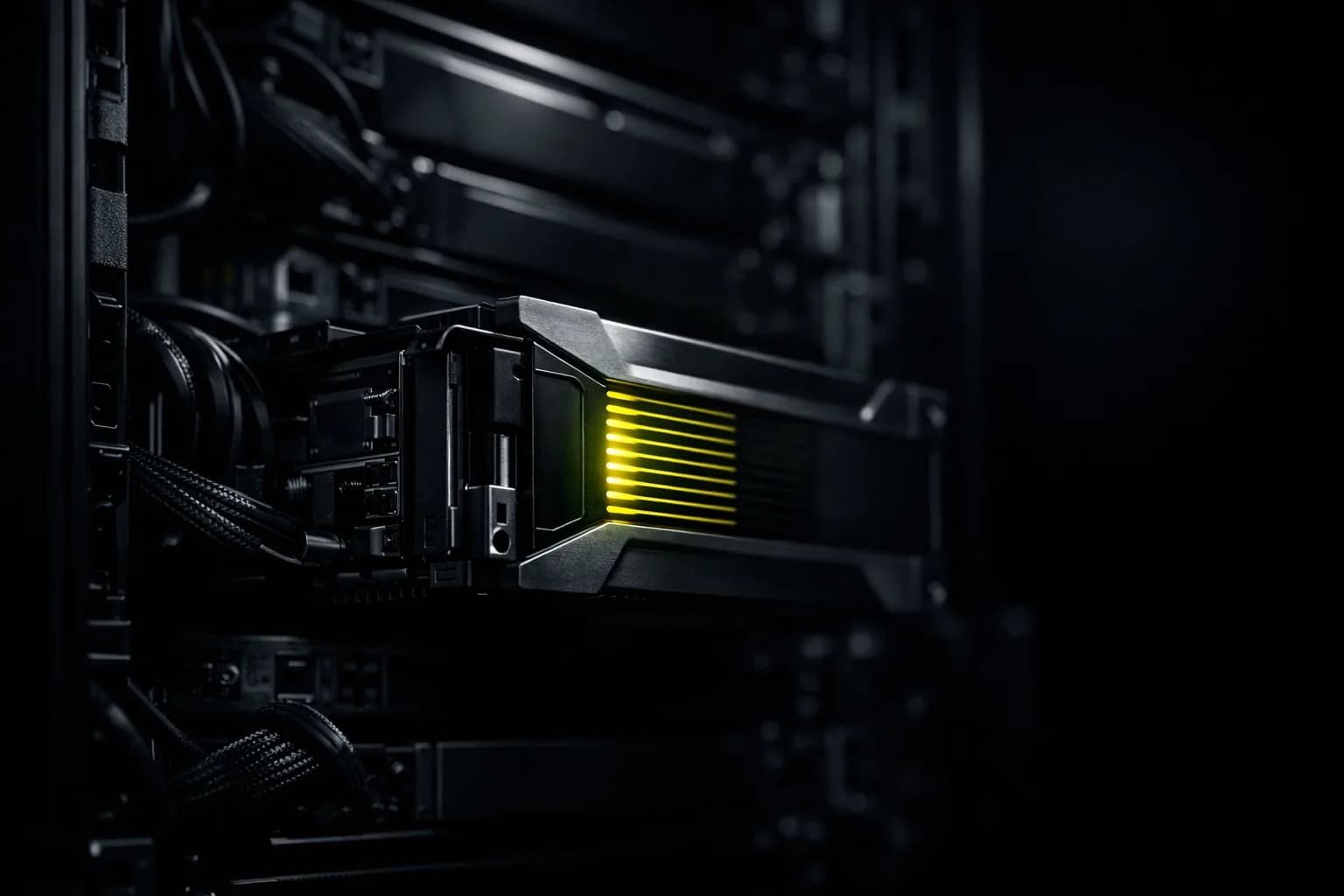
NVIDIA’s response: purpose-built systems designed to handle this computational sprawl efficiently. The Vera Rubin NVL72 is among the first to focus squarely on agentic workloads, promising radical improvements in work per watt.
NVIDIA Vera Rubin NVL72: Shifting the Efficiency Baseline
NVIDIA claims its Vera Rubin NVL72 delivers up to 30 times more work per watt for AI agent workloads compared to older architectures. That’s not just a marginal savings; it means the difference between needing dozens of racks or a single, tightly packed unit for the same output. The system is engineered for multi-GPU coordination and ultra-high memory bandwidth—features essential for AI agents that create and juggle multiple threads of computation at once.
For CFOs and CTOs, this translates directly to lower operational costs and a smaller data center footprint. It also means organizations can push the envelope on what their AI agents are allowed to do—without racking up outsize power costs or running into latency issues.
Decision Point: Invest in Next-Gen Hardware or Risk Falling Behind
The numbers make the decision urgent. As enterprise tasks shift from conversational AI to autonomous AI agents handling research, analysis, and reporting, the infrastructure gap widens. Investing in high-efficiency platforms like the Vera Rubin NVL72 is now less about chasing the latest tech and more about making the economics of AI agents viable at scale.
The alternative? Slowdowns, unpredictable cost spikes, or even having to throttle back innovation due to energy or cooling limits. Businesses betting on agentic AI need to move beyond incremental upgrades and instead consider foundational changes to their hardware strategy.
Why This Matters For Business Leaders Now
Choosing when and how to invest in specialized AI hardware isn’t academic. It can determine whether an organization leads or lags as workloads shift toward agentic models. Those who delay may find themselves priced out of advanced AI capabilities, or forced to outsource core intelligence functions due to infrastructure shortfalls.
For enterprises with ambitions to automate research, customer service, or internal analysis at scale, the choice is stark: retrofit and risk, or invest and accelerate. The efficiency standard has moved. Leaders must decide if their infrastructure will keep pace.
- ai agents
- hardware efficiency
- nvidia vera rubin
- enterprise ai
- data center strategy
Source: NVIDIA Blog
Keep reading



Want AI in production at your company?
Tell us about your project: we reply with a free first assessment and the next steps.
Join the Observatory list
Leave your email to hear about new pieces from the Observatory — concise AI analysis from real projects.